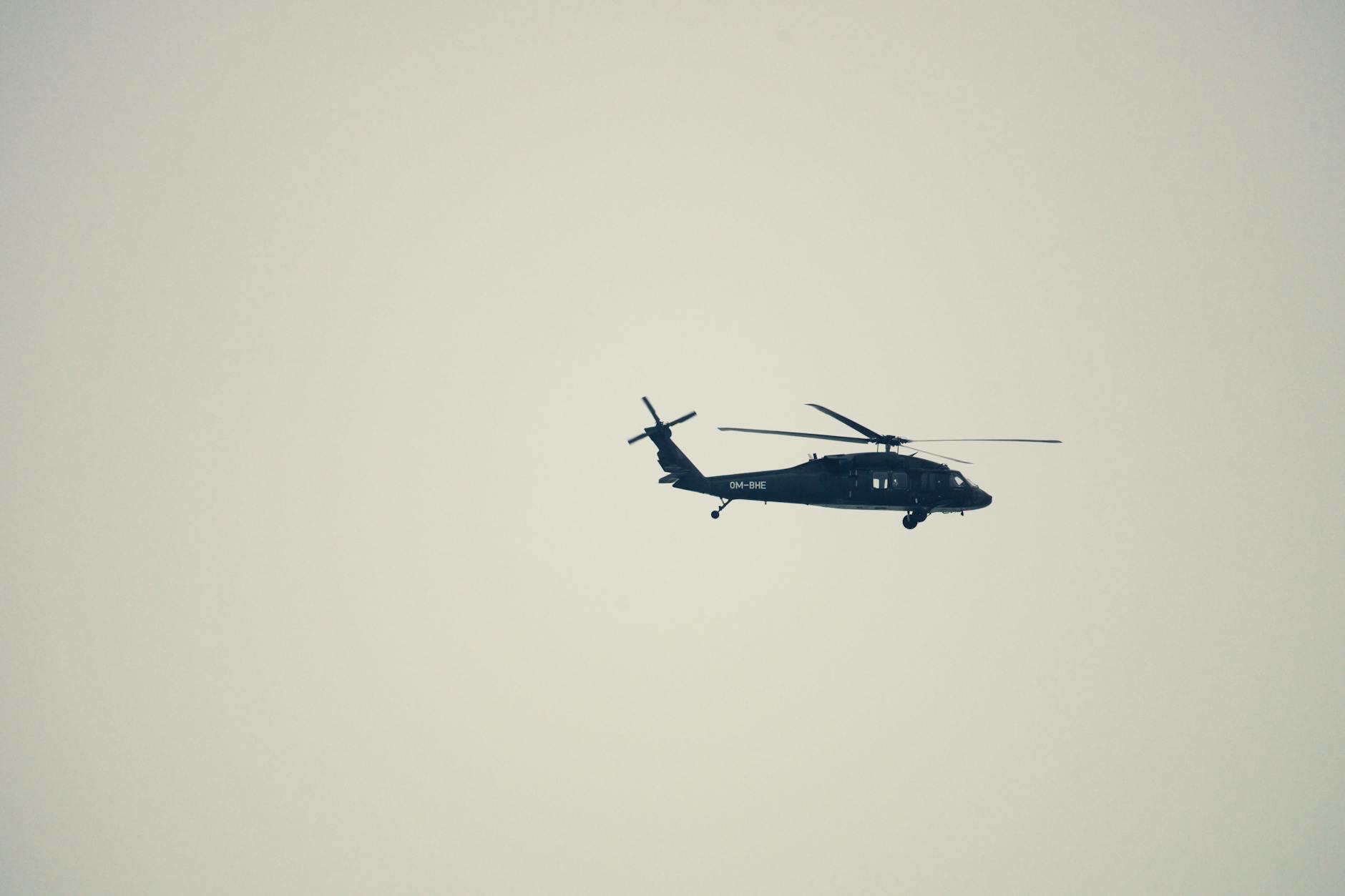
A massive American flag stretched across an open landscape while helicopters circled overhead, creating a striking image that quickly captured national attention. The scene, documented and shared across multiple platforms including https://enodurango.com/, reflects a moment where symbolism, security, and public sentiment intersect under heightened tension.
A powerful display of patriotism under watchful skies
The image of a giant US flag rippling in the wind is not new. It has long been associated with unity, resilience, and national pride. Yet in this instance, the context surrounding the display adds a layer of complexity that goes beyond symbolism.
Witnesses described a wide expanse where the flag dominated the ground below, its scale visible even from the air. Helicopters moved in coordinated patterns above, maintaining a steady presence. Their movement was not erratic. It was controlled, deliberate, and clearly part of an organized operation.
Events like this often occur during periods of heightened awareness. Public gatherings, demonstrations, or commemorative ceremonies can prompt increased aerial monitoring. The presence of helicopters signals that authorities are not leaving anything to chance.
Observers on site noted the contrast between the calm, almost ceremonial movement of the flag and the mechanical precision of the aircraft above. It created a visual tension. On one side, a symbol of unity. On the other, a reminder of vigilance.
This duality is what made the moment resonate. It was not just about patriotism. It was about the environment in which that patriotism was being expressed.
Security operations and the reasons behind aerial patrols
Helicopter patrols are commonly used in situations where ground-level visibility is limited or where rapid response may be required. From a technical standpoint, aerial units provide a broader field of view and faster mobility compared to traditional patrol methods.
Law enforcement agencies and federal authorities often deploy helicopters during:
- Large-scale public events
- Political gatherings or demonstrations
- Emergency response situations
- Areas with restricted or sensitive access
In this case, the steady aerial movement suggested routine monitoring rather than immediate intervention. Helicopters maintained altitude and spacing, indicating a surveillance role rather than an active enforcement scenario.
Experts point out that such deployments are often preventative. The goal is to ensure visibility and readiness. When people see aircraft overhead, it can act as a deterrent against disruptive behavior.
There is also a logistical advantage. Helicopters can relay real-time information to ground teams, helping coordinate responses if needed. This level of oversight is especially important when large crowds or symbolic displays are involved.
At the same time, the presence of aircraft can influence public perception. For some, it reinforces a sense of safety. For others, it can heighten awareness of underlying tensions.
This balance between security and perception is a constant challenge for authorities. The goal is to maintain order without escalating anxiety.
Public reaction and the broader meaning of the moment
Images of the massive flag and circling helicopters spread quickly online. Social media platforms amplified the scene, with users offering a wide range of interpretations.
Some viewed the moment as a strong display of national unity. The flag, large and unmistakable, represented a shared identity. In a time when divisions often dominate headlines, such imagery can feel grounding.
Others focused on the helicopters. Their presence raised questions about what prompted the level of surveillance. Was it precautionary, or was there a specific concern that had not been publicly disclosed?
Public reaction often depends on context. Without clear information, people fill in the gaps based on their own perspectives.
Journalists and analysts tend to approach these moments with caution. Visuals can be powerful, but they do not always tell the full story. Understanding the why behind the image requires looking at the broader situation.
There is also the role of media amplification. A single image, when shared widely, can shape narratives quickly. Headlines emphasize different aspects. Some highlight patriotism. Others focus on tension.
This divergence is not unusual. It reflects how complex modern events have become. A single scene can carry multiple meanings at once.
From a sociological perspective, moments like this reveal how symbols function in real time. The flag is not just a piece of fabric. It is a representation of values, history, and identity.
When placed in a setting with visible security measures, its meaning evolves. It becomes part of a larger story about how a nation presents itself during uncertain times.
The role of imagery in shaping modern narratives
In the digital age, visuals travel faster than explanations. A photo or short video clip can reach millions within minutes. The scene of a massive flag and hovering helicopters is a perfect example.
The composition itself is compelling. The scale of the flag draws attention. The motion of the helicopters adds urgency. Together, they create a narrative even before any text is added.
News organizations understand this dynamic. They choose images carefully because visuals often determine whether a story is read at all.
There is also a psychological element. Large symbols trigger emotional responses. Movement in the sky suggests activity, sometimes even threat. When combined, these elements create a sense of importance.
This is why such scenes become headline material. They capture attention quickly and hold it long enough for the story to unfold.
However, there is a risk. Without proper context, images can be misinterpreted. A routine security measure might be seen as a sign of crisis. A symbolic display might be viewed as political messaging.
Responsible reporting aims to bridge this gap. It provides details that help audiences understand what they are seeing.
Historical parallels and recurring themes
The combination of national symbols and security presence is not unique to this moment. History offers multiple examples where similar imagery appeared during key events.
During major national holidays, large flags are often displayed in prominent locations. Security is also increased during these times, especially in urban areas.
Political events, including inaugurations and large rallies, frequently involve both symbolic elements and visible security measures. The goal is to balance celebration with safety.
In times of crisis, such imagery can take on a different tone. The presence of helicopters may signal emergency response rather than routine monitoring.
What remains consistent is the role of the flag. It serves as a focal point. It anchors the scene, providing a sense of continuity even as circumstances change.
This continuity is important. It connects present moments to a broader historical narrative.
Understanding the intersection of symbolism and security
To fully grasp the significance of the scene, you need to look at both elements together.
The flag represents identity, unity, and continuity. It is meant to inspire and bring people together.
The helicopters represent oversight, readiness, and control. They are a practical response to potential risks.
When these elements appear in the same frame, they tell a layered story.
It is a story about a nation that values both expression and security. A nation that celebrates its symbols while remaining aware of its vulnerabilities.
This intersection is where meaning is created. It is not just about what is happening. It is about how it is perceived.
Conclusion
The image of a massive US flag waving beneath circling helicopters captures more than a single moment. It reflects the balance between pride and precaution that defines many public events today. When you look beyond the surface, you see a complex interaction of symbolism, security, and public perception that continues to shape how such moments are understood.
Related Reading
- The Statue of Liberty Remains a Symbol of Strength in a Time of National Uncertainty
- Trump Honors Service Member With Prestigious Military Medal at White House Ceremony
- How to build a powerful brand in today’s digital economy
About the Author