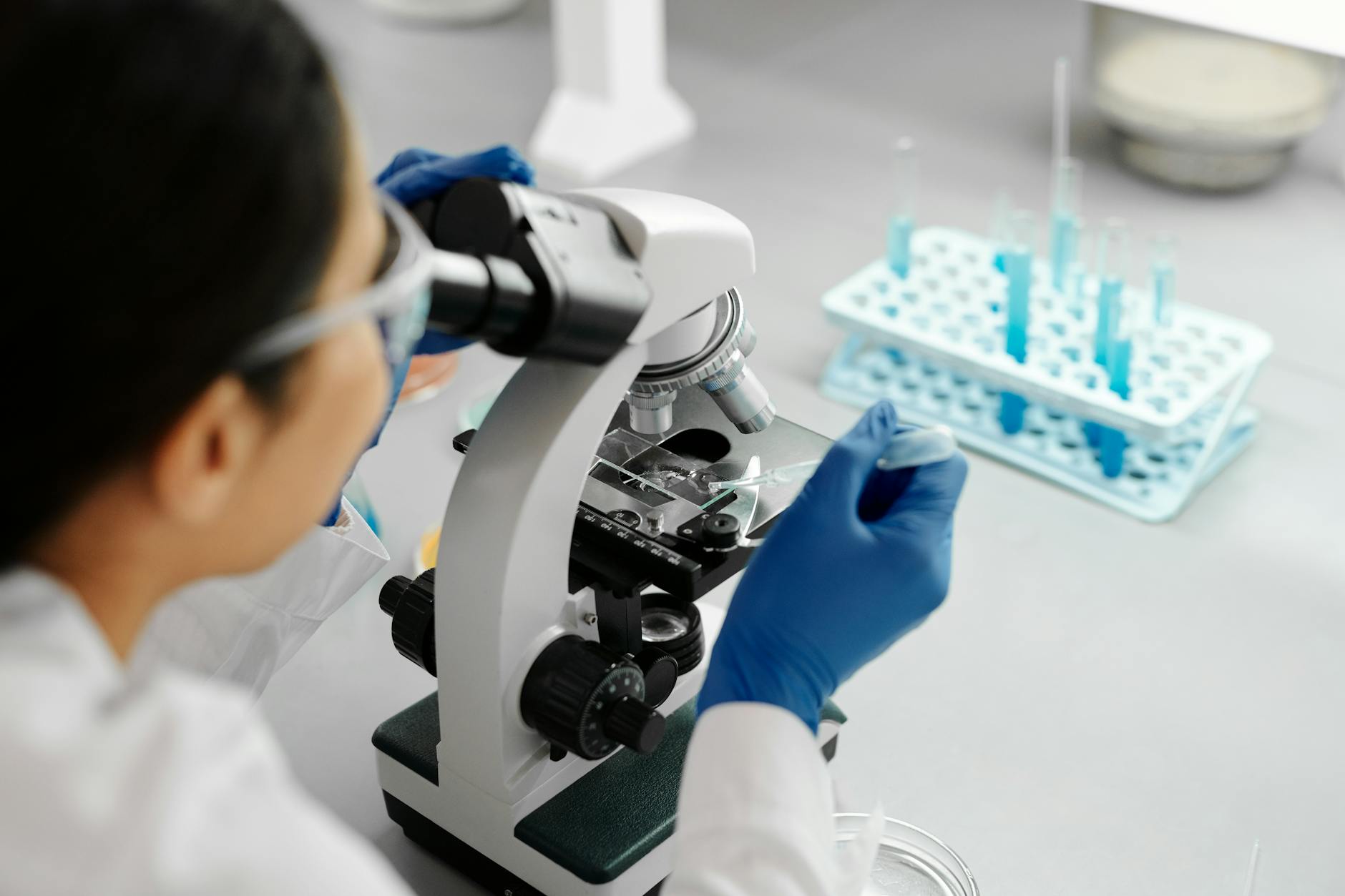
Scientific research is moving faster than ever, with breakthroughs across technology, medicine, climate science, and artificial intelligence influencing how you live and work. If you want to stay updated with emerging insights and global developments, platforms like https://enodurango.com/ provide a steady stream of curated information that connects research with real-world impact.
Artificial intelligence and data-driven discovery redefine research methods
Artificial intelligence is no longer a supporting tool. It is becoming the backbone of modern research.
Across industries, researchers are using machine learning models to process massive datasets that would take years to analyze manually. This shift is changing how discoveries are made.
AI accelerates scientific breakthroughs
In fields like drug discovery, AI is helping scientists identify potential compounds faster. Instead of testing thousands of options in a lab, algorithms can predict which molecules are most likely to work.
This reduces both time and cost. What once took a decade can now move forward in a fraction of that time.
AI is also being used in physics and astronomy. Researchers can now analyze space data more efficiently, identifying patterns that were previously invisible.
Data is now the most valuable research asset
You are living in a data-driven era. Every industry is generating massive amounts of information.
Researchers are focusing on:
- Big data analytics
- Predictive modeling
- Real-time data processing
These tools allow scientists to make faster and more accurate decisions.
For example, in public health, real-time data tracking helps predict disease outbreaks. This allows governments to respond quickly and prevent large-scale crises.
Ethical concerns are shaping AI research
As AI becomes more powerful, ethical questions are becoming central.
Researchers are now working on:
- Bias reduction in algorithms
- Transparency in AI decision-making
- Responsible data usage
These concerns are not slowing innovation. They are guiding it.
Biotechnology and health research move toward precision and personalization
Healthcare research is shifting from general solutions to personalized treatments. This is one of the most important trends you should understand.
Precision medicine becomes the new standard
Instead of treating all patients the same way, researchers are developing treatments based on individual genetic profiles.
This approach improves outcomes. It reduces side effects and increases the effectiveness of therapies.
Cancer treatment is a clear example. Targeted therapies are now designed to attack specific genetic mutations.
mRNA technology expands beyond vaccines
After the success of mRNA vaccines, researchers are exploring new applications.
You can expect developments in:
- Cancer vaccines
- Personalized immunotherapy
- Treatments for rare diseases
This technology allows scientists to design treatments quickly and adapt them as needed.
Mental health research gains global attention
Mental health is no longer overlooked. Research in this field is expanding rapidly.
Key focus areas include:
- Digital therapy platforms
- Brain imaging and neuroscience
- Preventive mental health strategies
There is a growing understanding that mental health is as important as physical health.
Wearable technology supports health monitoring
Devices like smartwatches are now part of medical research.
They provide continuous data on:
- Heart rate
- Sleep patterns
- Physical activity
Researchers use this data to study long-term health trends and improve preventive care.
Climate science and sustainability research drive global priorities
Climate change is one of the most urgent issues today. Research in this area is influencing policies, industries, and everyday decisions.
Renewable energy innovation accelerates
Scientists are working on improving renewable energy sources.
Key developments include:
- More efficient solar panels
- Advanced battery storage systems
- Hydrogen energy solutions
These innovations aim to reduce dependence on fossil fuels.
Carbon capture and climate engineering gain traction
Researchers are exploring ways to remove carbon dioxide from the atmosphere.
This includes:
- Direct air capture technology
- Carbon storage solutions
- Ocean-based carbon absorption methods
These approaches are still developing, but they show potential.
Sustainable materials reshape industries
There is a strong focus on replacing traditional materials with sustainable alternatives.
Examples include:
- Biodegradable plastics
- Recycled construction materials
- Eco-friendly textiles
These innovations are helping reduce environmental impact.
Urban research focuses on smart and green cities
Cities are becoming research hubs for sustainability.
Researchers are studying:
- Smart infrastructure
- Energy-efficient buildings
- Public transportation systems
The goal is to create cities that are both livable and environmentally responsible.
Interdisciplinary research becomes the new normal
One of the most important trends is collaboration across fields.
Researchers are no longer working in isolation. They are combining expertise to solve complex problems.
Collaboration across disciplines drives innovation
You now see partnerships between:
- Engineers and medical researchers
- Data scientists and environmental experts
- Social scientists and technologists
This approach leads to more comprehensive solutions.
For example, developing a smart healthcare system requires both medical knowledge and advanced technology.
Global research networks expand rapidly
Technology allows researchers from different countries to work together in real time.
This leads to:
- Faster knowledge sharing
- More diverse perspectives
- Increased innovation
Global collaboration is especially important in areas like climate science and public health.
Open access research increases transparency
More research is becoming publicly available.
This helps:
- Students access knowledge easily
- Smaller institutions participate in research
- The public understand scientific developments
Transparency builds trust and encourages collaboration.
Technology continues to reshape how research is conducted
Beyond AI, other technologies are transforming research environments.
Cloud computing enables large-scale experiments
Researchers can now run complex simulations without expensive infrastructure.
Cloud platforms provide:
- Scalable computing power
- Data storage solutions
- Collaborative tools
This makes research more accessible.
Virtual and augmented reality enter research spaces
VR and AR are being used for:
- Medical training
- Engineering simulations
- Educational research
These tools provide immersive experiences that improve learning and experimentation.
Automation reduces manual workload
Laboratories are becoming more automated.
Robotic systems can:
- Conduct experiments
- Collect data
- Perform repetitive tasks
This allows researchers to focus on analysis and innovation.
Conclusion
Research trends this year show a clear direction. Technology, collaboration, and sustainability are driving innovation forward. If you stay informed, you can better understand how these developments will shape your future, from healthcare to the environment and beyond.
Related Reading
- The scientific breakthroughs redefining the future of innovation
- Breakthrough discoveries in 2026 that are reshaping science and everyday life
- Urban Expansion Reshapes City Skyline as Key Roads Shut Down
About the Author